
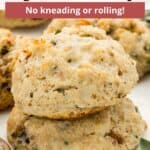

These savory Sage Biscuits are made drop-style, so there's no kneading, rolling, or cutting! We use the same (maybe even genius) technique from our family-favorite buttermilk biscuits to make them tender and fluffy with none of the fuss. They'll be on your table in under 30 minutes, making them perfect for busy weeknights or holiday meals alike.
This recipe is just one of many in our growing collection of Homemade Bread Recipes, where you can find more ideas for your family meals.

My absolute favorite herb to grow in my little garden is fresh sage. It somehow grows so well (despite my lack of a green thumb), and turns a basic bread into one that I've actually added to my list of Thanksgiving Recipes.
To make sure the sage flavor really shines, I borrowed the trick we use with these Brown Butter Chicken Bites - cook the sage right in the butter until the butter is toasty and sage is a bit crispy. SO much yum!
Skip to:

Recipe Notes from Danielle & Misty
We used to make old fashioned homemade buttermilk biscuits on the regular - you know, the kind where you laminate the dough, roll it out, cut it, and repeat? They're delicious... but then we found drop biscuits and we've rarely looked back! We've now been making these easy Buttermilk Drop Biscuits for years, and use the same technique on this recipe to get really delicious results. The tips we include in this post are not random; they're the little things we've learned that absolutely make the difference.
Ingredients for sage biscuits
These are the most basic of pantry basics! Most of these are self-explanatory, but I do have a couple of suggestions below that I learned through trial and error.
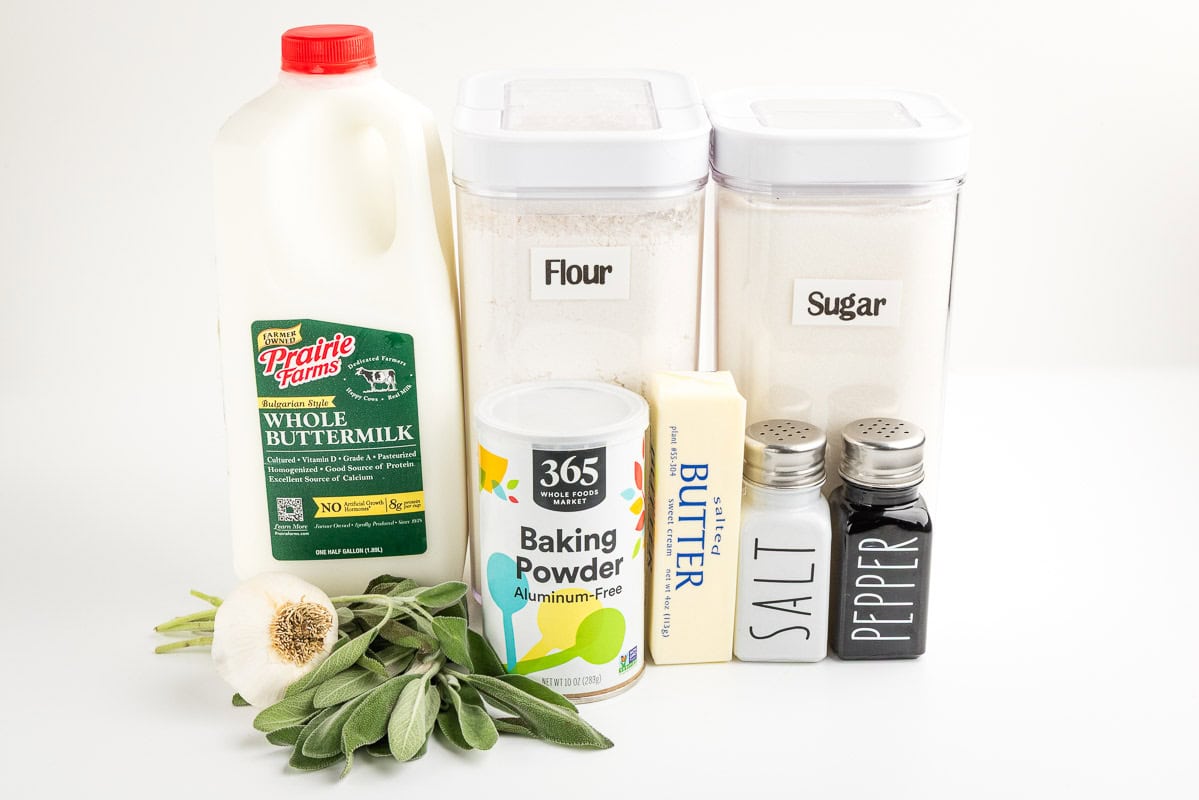
- Butter: I know the whole internet says to bake with unsalted butter, but I just disagree. I love baking with salted butter!
- Fresh sage: This recipe uses quite a lot of sage so that the flavor actually shines through. It's a pretty simple herb to grown in your garden, so it's cheapest to buy a plant if you can. It has slightly bitter taste when raw, so we will be cooking it in the butter to draw out all the amazing flavor and give it a little crisp.
- Garlic: You can use fresh cloves and a garlic press or buy it pre-minced. I don't find it matters which option you choose in this recipe.
- Buttermilk: There are a lot of recipes for homemade buttermilk on the internet, but I have tried many versions and just don't get the same results as store-bought. I truly recommend buying a bottle from the grocery store. It lasts forever and it gives you a good excuse to make our most favorite Chocolate Bundt Cake.
- All-purpose flour: Cake flour will be too soft and bread flour will be too dense.
- Granulated sugar: Just the tiniest bit takes off the edge from the buttermilk.
- Baking powder: Make sure the container says that it is aluminum free so that you don't end up with a metallic taste. You also want it to be fresh! In my experience, if it's older than 5-6 months it won't produce quite the same results.
- Salt and ground black pepper: Kosher salt and pink salt are the only salts I cook with.
Helpful kitchen tools


Technique
Tender biscuits without folding the dough
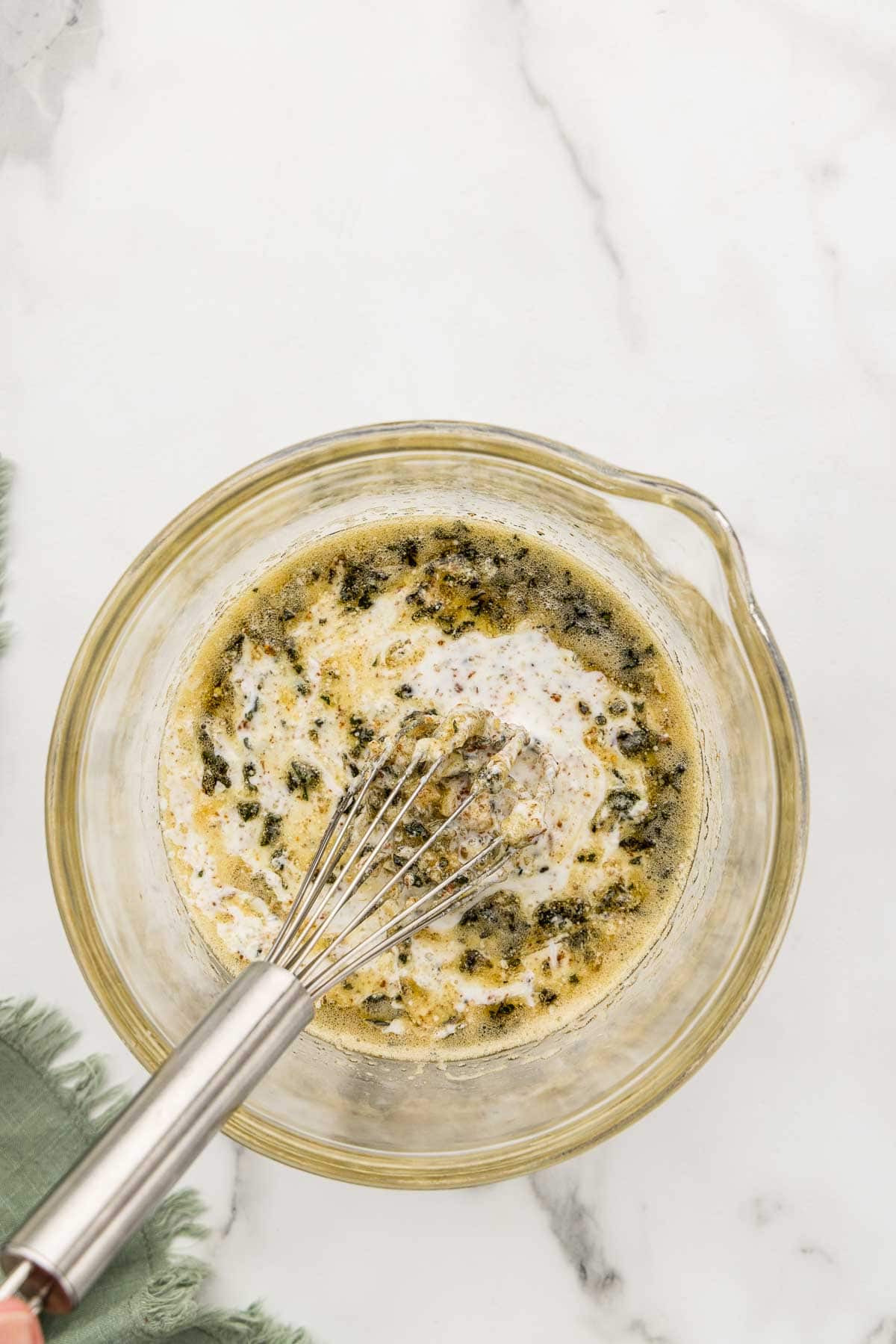
Traditional biscuits utilize a method called laminating where you fold the dough multiple times to distribute cold butter throughout, creating pockets of steam that make them fluffy. Delicious, but a lot of work! We have a way easy shortcut that mimics that effect: pour warm butter into very cold buttermilk. The butter seizes into tiny curdles, which distribute throughout the dough and form those same little pockets of steam.
How to make sage biscuits
First, preheat the oven to 450 degrees and line a standard cookie sheet with parchment paper. Then measure the buttermilk into a large liquid measuring cup and place it in the freezer.
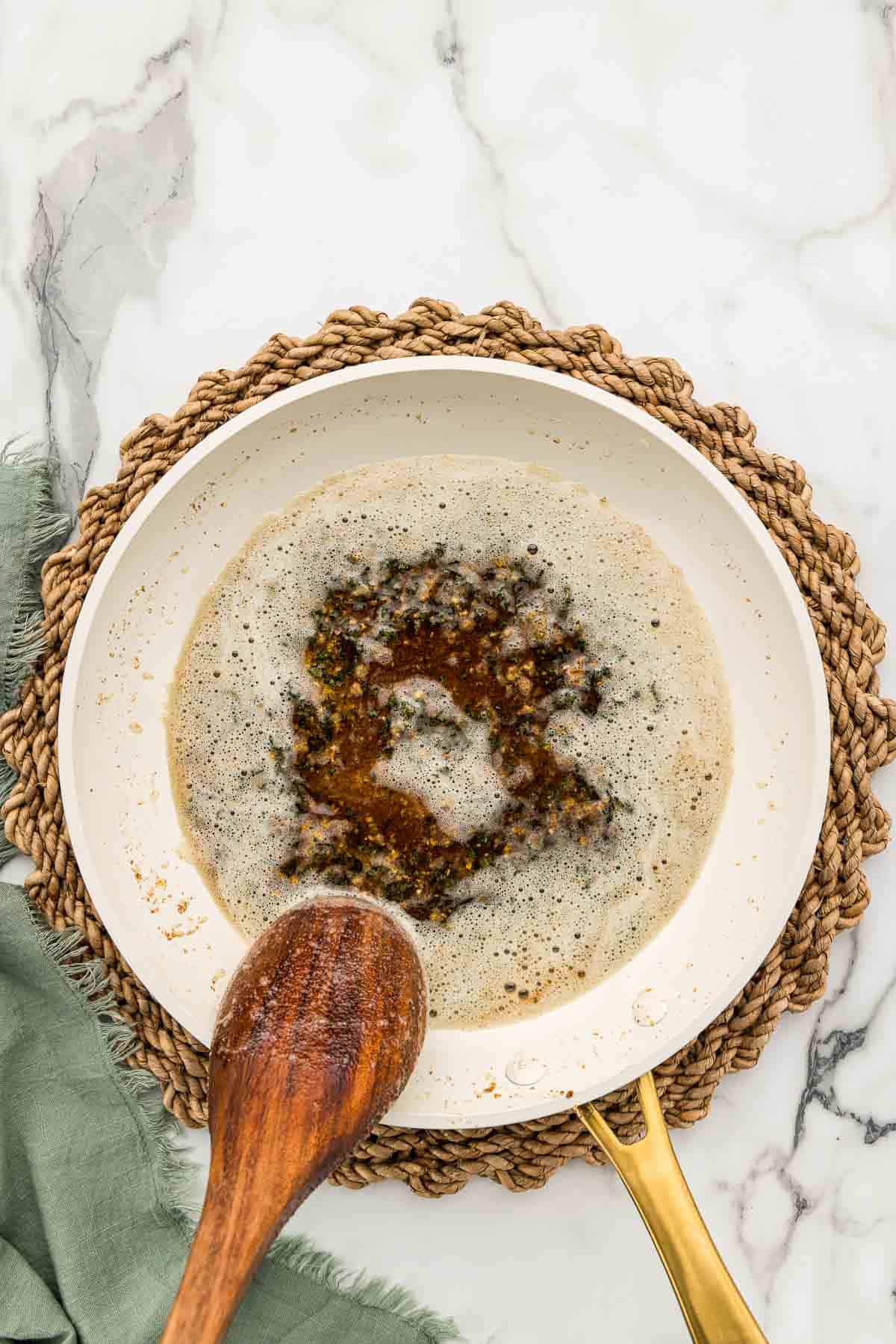
In a medium skillet or pot, melt the butter over medium heat. Allow it to cook until it's barely turning golden brown and foamy, stirring occasionally.
Once barely golden, add the sage and garlic. Continue cooking until the butter is a true golden brown and fragrant, about 60-90 seconds. Then pour it into a bowl to help it start cooling (be sure to scrape up all the brown bits and sage from the pan!).
*If you've never done this before, we have a whole guide on How to Brown Butter on the Stove that you can reference for more tips!
While the butter is cooling, whisk together all the dry ingredients in a large bowl.
Once the butter is warm but not piping, pull out the buttermilk from the freezer. Pour the warm butter into the buttermilk and whisk well, until tiny clumps or curdles form.
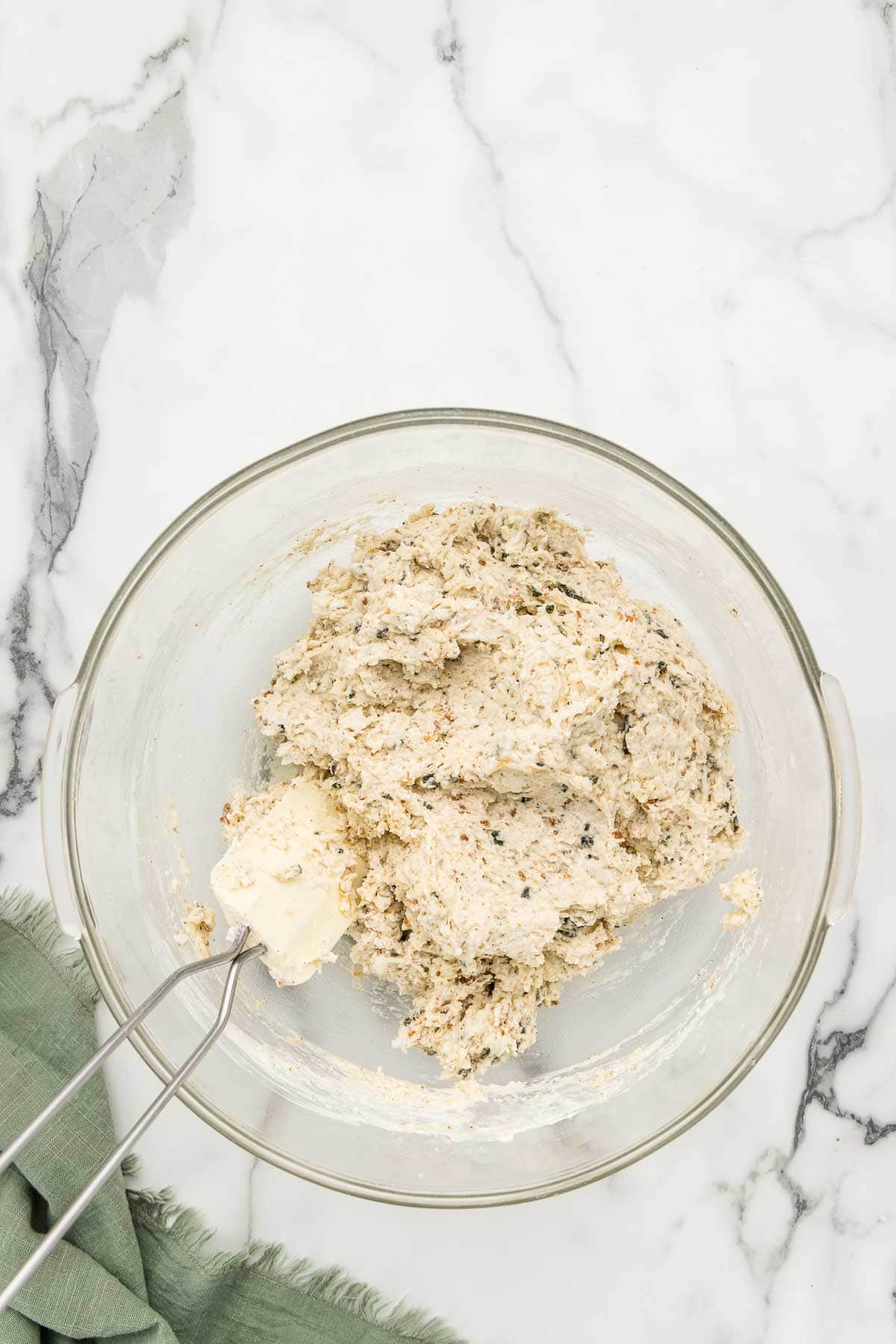
Pour the wet ingredients into the dry ingredients and stir well with a rubber spatula until it's just combined. Be careful not to overmix, because that's a quick way to make these tough instead of tender.
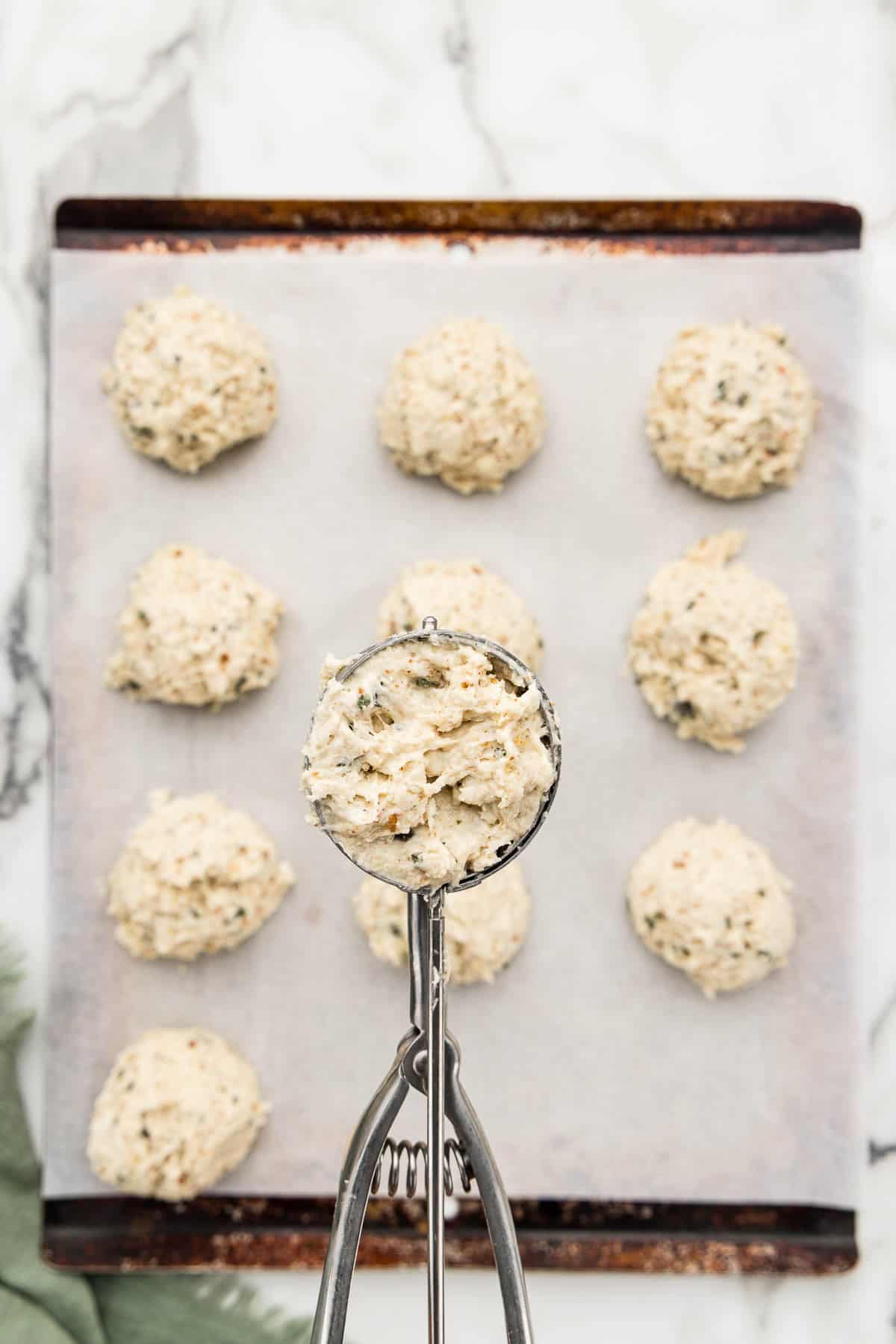
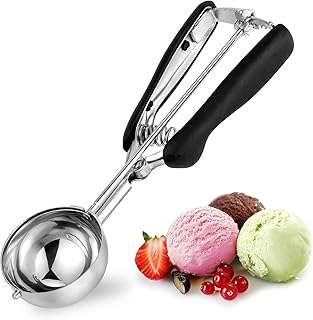
Using a ¼ cup cookie scoop, portion the dough into 10-12 biscuits onto the prepared sheet pan. Bake them for 13-15 minutes, or until they're golden brown on the bottom and cooked through.
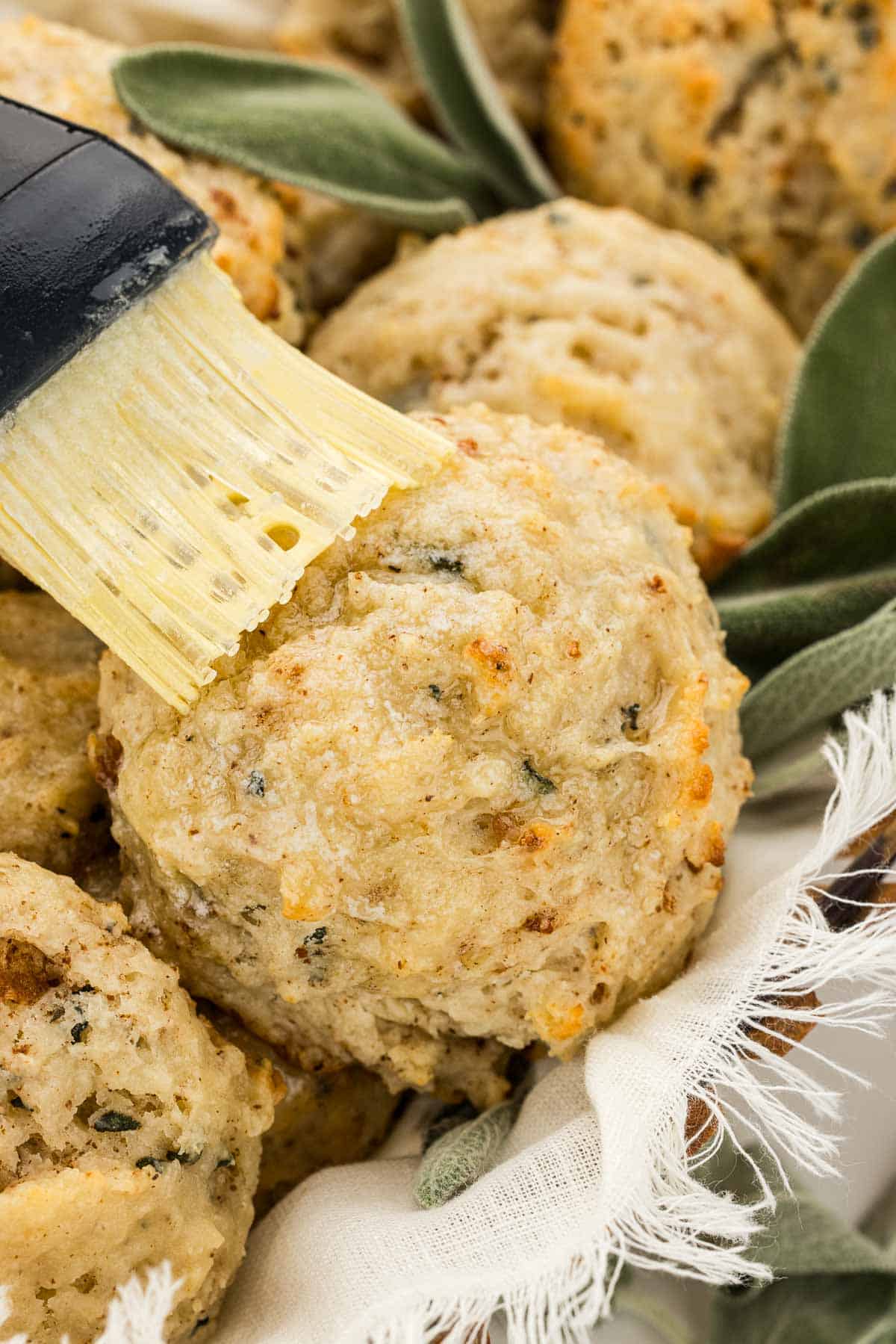
Give them 5-10 minutes to cool on the pan (I find that this improves their texture). Then brush them with more melted butter if you'd like and serve warm!
Storage instructions
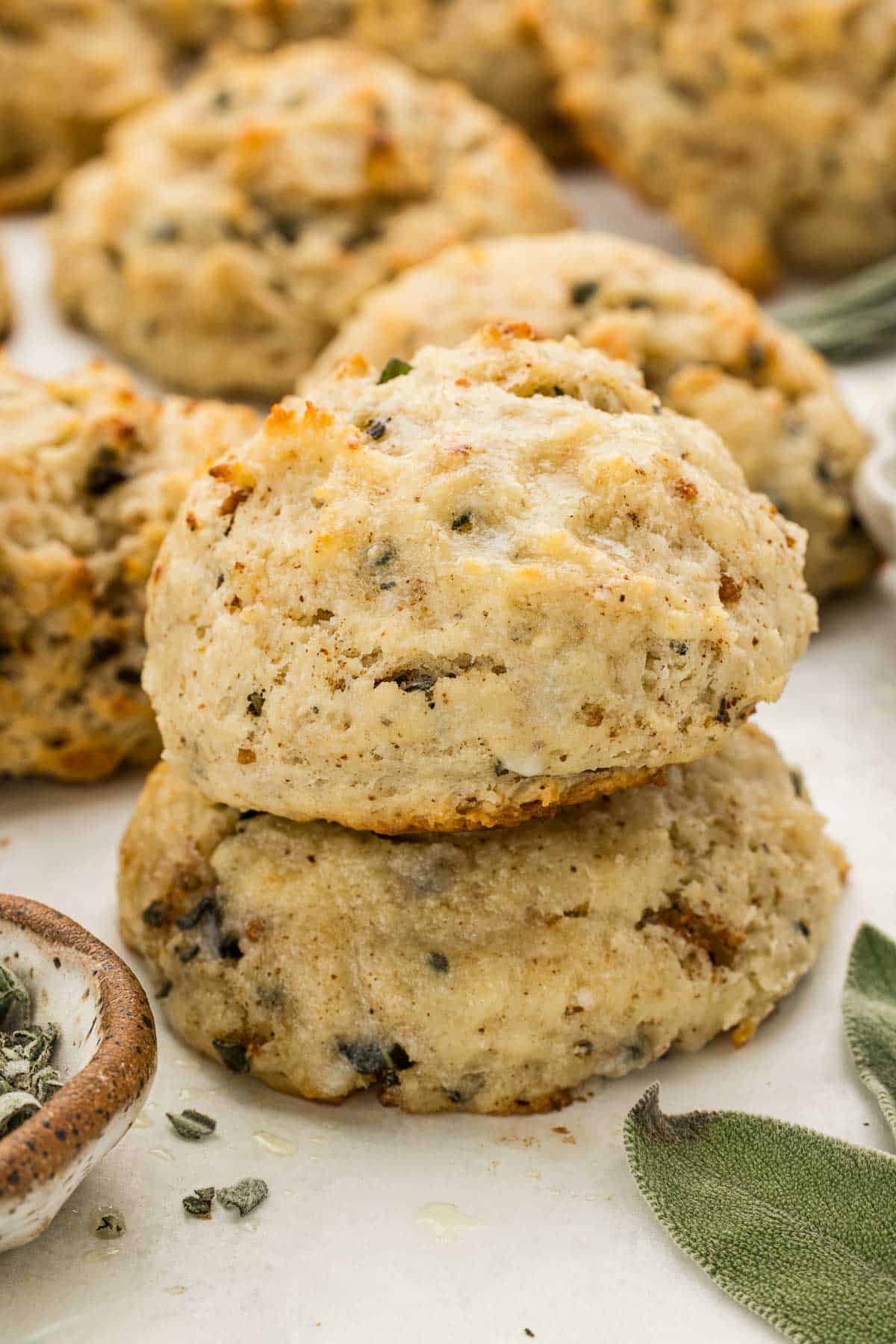
Store leftovers in a very well sealed container at room temperature or in the fridge for 2-3 days. I suggest reheating them for a few seconds in the microwave to restore some of the soft texture, but just know that leftover biscuits are never the same as fresh.
What to serve with savory biscuits
These would be so good alongside soups, chilis, or stews! The herby flavor pairs really well with this Easy Potato Soup or this Roasted Tomato Soup.
They would also make a great side for skillet dinners, like quick Maple Chicken or my favorite one-pan Orange Rosemary Chicken. They're even great with Grilled Lemon Chicken and other marinated meats.
Can I freeze biscuit dough?
These are hands-down the very best when served fresh. So if freezing, I would suggest freezing them raw on a lined cookie sheet, then storing in an airtight container once they are solid. Bake them straight from frozen, adding an extra 1-2 minutes of baking time.
If you have some baked ones leftover, let them cool completely before freezing them. Thaw them at room temperature, then warm them slightly in the microwave for best results. Not as good as fresh, but it sure is convenient.
Tips & Tricks
- Make sure the buttermilk is super cold and the butter is warm when you combine the two. The difference in temperature is what helps the little clumps form that make these so fluffy without a lot of work.
- Mix the dough just until all the white streaks of flour are combined, then stop. Overmixed dough = tough texture.
- Work quickly so that the dough stays nice and cold before it goes into the oven. If the little clumps of butter soften before you start baking, the biscuits won't get as fluffy and tender.
More recipes
Looking for other recipes? Try these:
This post was photographed by Rhadonda Sedgwick.
Recipe

Savory Sage Biscuits Recipe
Ingredients
- 1 ¼ cups buttermilk shaken, very cold
- 10 tablespoons salted butter
- ¼ cup (about 4 oz) fresh sage diced, then measured - Yep, it's a lot!
- 1 tablespoon garlic minced
- 2 cups all purpose flour
- 1 tablespoon granulated sugar
- 1 tablespoon baking powder aluminum-free
- 1 teaspoon kosher salt
- ¼ teaspoon ground black pepper
- 2-3 tablespoons melted butter to brush on top (optional)
Instructions
- Preheat the oven to 450°F. Line a sheet pan with parchment paper and set aside.
- In a liquid measuring cup, measure the buttermilk, then place in the freezer to get extra cold while you work on the next steps.1 ¼ cups buttermilk
- In a medium skillet, melt the butter over medium heat. Allow it to cook until it's barley turning golden brown and foamy, stirring occasionally. Once barely golden, add the sage and garlic. Continue cooking until the butter is a true golden brown and fragrant, about 60-90 seconds. Pour it into a bowl to help it start cooling (be sure to scrape up all the brown bits and sage from the pan!).10 tablespoons salted butter, ¼ cup (about 4 oz) fresh sage, 1 tablespoon garlic
- While the butter is cooling, whisk together the flour, sugar, baking powder, salt, and black pepper in a large bowl.2 cups all purpose flour, 1 tablespoon granulated sugar, 1 tablespoon baking powder, 1 teaspoon kosher salt, ¼ teaspoon ground black pepper
- Once the butter is warm but not piping hot, remove the cold buttermilk from the freezer. Add the browned butter to the milk and mix well with a whisk or fork. It should form small curdles or clumps.
- Pour the wet ingredients into the dry ingredients and stir well with a rubber spatula until the dough is just combined (don't overmix). Using a ¼ cup scoop, scoop the biscuit dough into 10-12 biscuits onto the prepared sheet pan.
- Bake for 13-15 minutes, or until golden brown on the bottom and cooked through. Allow to cool on the rack for 5-10 minutes. Then brush with extra melted butter (if desired) and serve warm.2-3 tablespoons melted butter to brush on top
Notes
- Make sure the buttermilk is super cold and the butter is warm when you combine the two. The difference in temperature is what helps the little clumps form that make these so fluffy without a lot of work.
- Mix the dough just until all the white streaks of flour are combined, then stop. Overmixed dough = tough texture.
- Work quickly so that the dough stays nice and cold before it goes into the oven. If the little clumps of butter soften before you start baking, the biscuits won't get as fluffy and tender.
Add Your Own Notes
Nutrition
All nutrition information is provided by a third party and is an estimate only. Use your own nutritional calculator for more specific measurements.



Misty says
This is a quick recipe that puts a flavorful spin on simple buttermilk biscuits!